
Introduction:
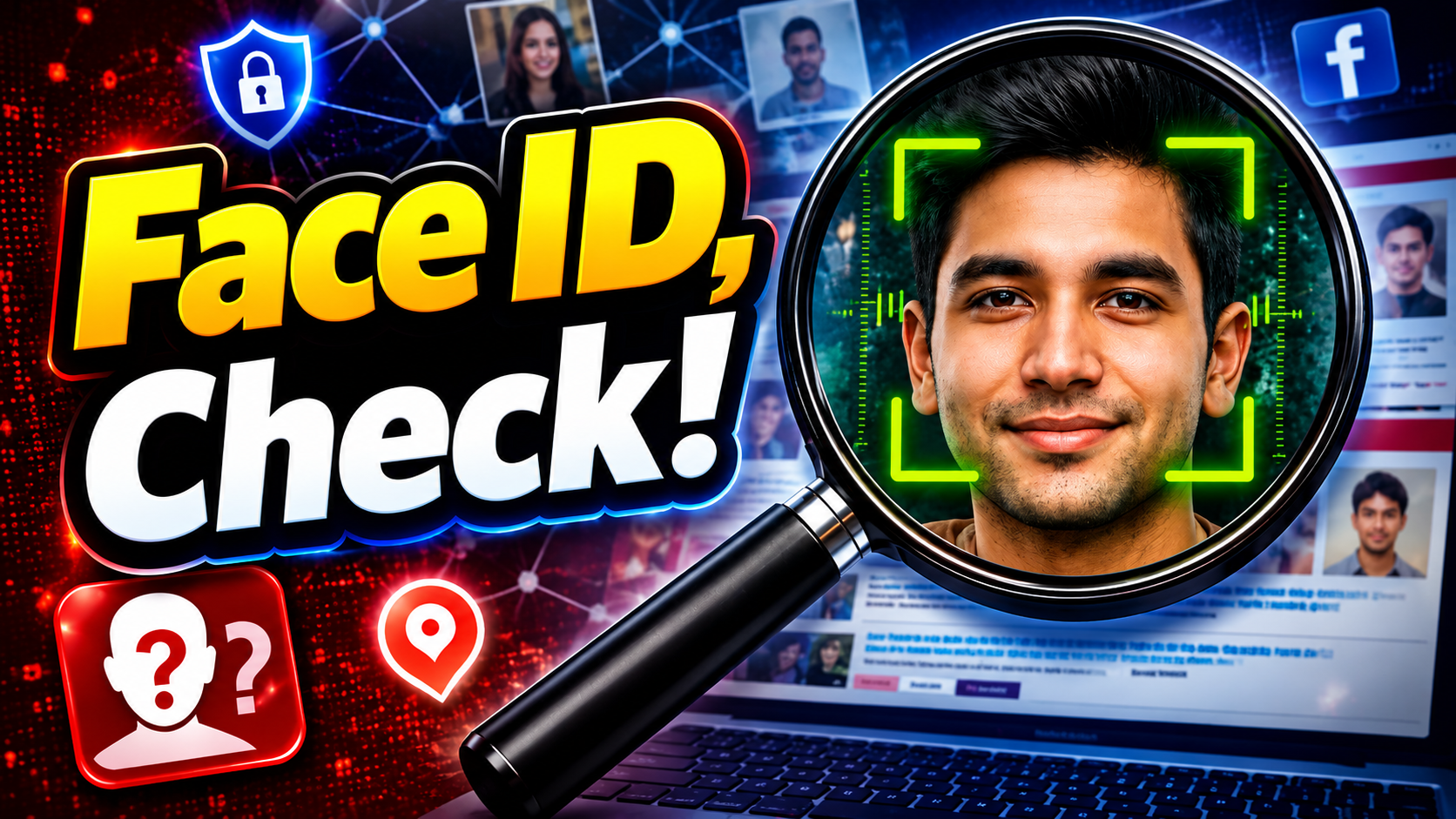
Check If Someone Is Using Your Photo Online Insta & Facebook in 2026 Searching for information about a person from a photograph can be difficult when you do not know the person’s name, username, website, or other identifying information. This is where Facecheck.id can be useful. Facecheck.id is a face search platform designed to help users find images on the internet that contain faces visually similar to the face in an uploaded photograph. Instead of entering a traditional keyword into a search engine, users can start with an image and allow the platform to search for potentially related photographs and webpages.
The growing popularity of face-search technology comes from the increasing amount of visual content available online. Social media profiles, websites, blogs, forums, news pages, public directories, and other online platforms contain millions of photographs. Finding a particular image manually can take a significant amount of time. A facial search service can make this process easier by analyzing the face in an image and looking for visually similar results. However, users should understand that a face search result is not automatically proof of someone’s identity.
What Is Facecheck.id?
Facecheck.id is an online facial search service that allows users to search for faces using an image. The platform is built around the concept of searching the web through facial characteristics rather than relying only on text or conventional image-matching techniques. A user can provide a photograph containing a face, and the system attempts to locate images that contain a similar-looking face across its searchable online sources.
The main difference between Facecheck.id and a standard search engine is the way the search begins. A traditional search engine normally requires words such as a person’s name, location, profession, or other information. With Facecheck.id, the photograph itself can be the starting point. This can be particularly helpful when the person shown in an image is unknown or when the user wants to investigate where a particular face may appear online.
Facecheck.id should be viewed as a visual search and discovery tool rather than an official identity-verification service. The results are based on visual similarity and indexed online content. Therefore, a result that looks similar should be investigated further before making any conclusion about the person shown in the photograph.
How Does Facecheck.id Work?
The basic technology behind Facecheck.id involves analyzing a face contained within an uploaded image and comparing visual characteristics against photographs available through its search system. When a user submits an image, the system needs to determine which part of the photograph represents the face and then extract relevant visual characteristics. These characteristics can be used to find photographs that appear to contain a similar face.
The quality of the uploaded photograph can have a major effect on the search. A clear image with a well-lit, front-facing face is generally more useful than a photograph where the face is blurry, extremely small, covered by sunglasses, partially hidden, or heavily edited. Group photographs can also make the search more complicated because multiple faces may be present in the same image.
After processing the image, the service can return visually related results. Depending on what is available in its searchable database, results may include photographs and webpages associated with those photographs. Users can then examine the results and determine whether any of them are relevant to their original search.
Check If Someone Is Using Your Photo Online Insta & Facebook in 2026 It is important to understand that facial search technology does not work like a human identification expert. Two unrelated people can have similar facial characteristics, while photographs of the same person can look significantly different because of age, lighting, hairstyle, facial expression, camera angle, or image quality. For this reason, Facecheck.id results should be treated as possible matches or leads rather than absolute confirmation.
How to Use Facecheck.id for Face Search
Using Facecheck.id generally begins with selecting an appropriate photograph. The best starting image is usually a clear photograph where the face is visible and occupies a reasonable portion of the image. Before uploading, users should make sure they have the right to use the photograph and should consider whether the search is appropriate from a privacy perspective.
Once a suitable image is selected, the user can open the Facecheck.id website and use its face-search interface. The image is submitted for analysis, after which the system processes the facial characteristics and searches for potentially similar results. Depending on the platform’s current interface and features, users may need to follow additional instructions before viewing the available results.
When results are displayed, do not immediately assume that the first or closest-looking result represents the same person. Instead, examine the surrounding context. Look at the original webpage, photograph, publication date, image quality, clothing, hairstyle, background, and other details that can help determine whether the result is genuinely relevant.
For better results, users can also consider trying a different photograph of the same person. One image may produce limited results because of lighting or facial angle, while another clearer photograph could provide more useful matches. If the platform allows different search options, users should follow the current instructions displayed by the website.
Facecheck.id can be particularly useful when the only information available is a photograph. However, users should avoid attempting to uncover private information or using search results to harass or target individuals.
Facecheck.id Features and Benefits
One of the most important features associated with Facecheck.id is its face-focused search approach. Instead of searching for objects, products, words, or general image characteristics, the service concentrates on faces. This makes it potentially useful in situations where the person’s identity or online presence is the main subject of the search.
Another advantage is that users can begin with very limited information. If someone has an image but does not know the person’s name, a traditional keyword search may not be very effective. A facial search can provide another starting point by looking for visually similar photographs.
Check If Someone Is Using Your Photo Online Insta & Facebook in 2026 Facecheck.id may also be useful for discovering where photographs or similar facial images appear online. For example, a user researching their own online presence may want to understand whether photographs containing their face appear on publicly accessible webpages. This type of search can help people become more aware of their public digital footprint.
The usefulness of the results depends on what information is available online. If a person’s photographs are not publicly indexed or are located behind private accounts, the search may produce few or no useful results. Similarly, newly uploaded photographs may not immediately appear in any search index.
Search performance can also vary based on image quality. A high-resolution photograph with a clearly visible face generally provides more useful information than a heavily compressed screenshot. Therefore, choosing the right image is one of the most important steps when using a facial search platform.
Facecheck.id vs Traditional Reverse Image Search
Many people confuse facial search with conventional reverse image search, but the two approaches are not exactly the same. Traditional reverse image search generally attempts to find the same image or visually related versions of an image. It can be useful for finding duplicate photographs, modified copies, websites using a particular picture, products, locations, and other visual content.
Facecheck.id, on the other hand, focuses specifically on the face contained within an image. This difference can be useful when the original photograph has been cropped, resized, edited, or used in a different context. A conventional reverse image search may have difficulty finding a related photograph if the original image has changed significantly, while a face-oriented search may still be able to identify visual similarity.
For example, imagine a photograph containing a person standing in front of a building. A traditional reverse image search may concentrate on the entire image, including the background and overall composition. A facial search focuses more directly on the person’s face. This can make the two technologies complementary rather than competing solutions.
Users who are researching an unknown photograph may therefore benefit from using multiple legitimate search methods. A standard reverse image search can help locate copies of the original image, while a face-search service can potentially locate other photographs containing a similar face.
Neither method should be treated as an automatic identity-verification system. Search results still require human evaluation and additional context.
Is Facecheck.id Accurate and Reliable?
The question of Facecheck.id accuracy is important because facial similarity can sometimes be misunderstood as confirmed identification. Facial search systems are designed to find similarities, but similarity does not necessarily mean two photographs show the same individual.
Several factors can influence results. Image resolution is one major factor. A low-quality image contains less visual information, which can make facial comparison more difficult. Lighting is another factor because shadows and overexposure can change the visible appearance of facial features. Camera angle, facial expression, hairstyle, makeup, age, and image compression can also affect the result.
The search database is equally important. Even if a facial-search system can technically recognize a face, it cannot return a webpage that is not available within the sources it can search. A person may have many photographs online but still receive limited results if those pages are private, blocked from indexing, newly published, or otherwise unavailable to the search system.
Check If Someone Is Using Your Photo Online Insta & Facebook in 2026 False matches are another consideration. People can share similar facial structures, and an automated system may return a photograph that looks convincing but belongs to another individual. On the other hand, the system may fail to find a genuine match because the available photograph is too different from the search image.
For these reasons, users should evaluate multiple pieces of evidence. If a search result appears relevant, open the associated webpage and examine its context rather than relying solely on the visual similarity score or appearance of the thumbnail.
For important situations, automated face-search results should never be the only basis for making decisions about another person. Additional reliable information and appropriate verification should always be considered.
Facecheck.id Privacy, Safety, and Responsible Use
Privacy is one of the most important subjects surrounding any facial-search technology. A face is a sensitive form of personal information, and users should understand the privacy implications before uploading photographs to an online service. Before using Facecheck.id, users should review the platform’s latest privacy policy, terms of service, and information about how uploaded images and search data are handled.
People should also consider where the photograph came from and whether they have permission to use it. Searching for your own photographs can be a reasonable way to understand your public online presence. However, using facial-search technology to stalk, harass, threaten, impersonate, or expose private information about another person can cause serious harm and may violate applicable laws or platform rules.
Users should also be careful when interpreting information discovered through search results. A webpage containing a photograph does not necessarily provide accurate information about the person in that photograph. Images can be reposted, incorrectly labeled, taken out of context, or associated with unrelated names.
It is also important to remember that online information can change. A webpage that exists today may be removed later, while new photographs can appear over time. Search results should therefore be considered a snapshot of publicly searchable information rather than a complete record of someone’s online presence.
Responsible use means limiting searches to legitimate purposes, respecting privacy, avoiding sensitive conclusions, and verifying information through appropriate sources. Face-search technology can be useful, but it should always be used with caution.
Facecheck.id: Common Uses, Tips, and Final Verdict
There are several legitimate situations where Facecheck.id can be useful. One common use is checking your own online presence. If you have published photographs publicly, a facial search may help you discover pages where similar photographs appear. This can be useful for understanding your digital footprint and identifying websites that contain publicly accessible images of you.
Another possible use is researching an unknown photograph. If you receive an image and want to understand whether a similar photograph appears elsewhere online, a face-search service can provide an additional research method. Journalists, researchers, content creators, photographers, and ordinary internet users may find visual search tools helpful when investigating publicly available information.
For the best possible results, start with a clear and high-quality photograph. Avoid images where the face is very small, heavily blurred, covered, or distorted. If one image produces poor results, another suitable photograph may provide a better search. Always examine the complete webpage behind a result rather than relying only on a thumbnail.
Conclusion:
Users should also compare information across multiple sources. A face match alone does not prove identity, and a website’s description may not always be accurate. Treat search results as clues that require verification.
Link Here
Overall, Facecheck.id is an interesting face-search tool for people who want to explore publicly available images using a photograph rather than traditional keywords. Its biggest advantage is its focus on facial similarity, which can provide a different type of search result from conventional reverse image search engines. At the same time, its results have limitations and should not be interpreted as guaranteed identification.
Check If Someone Is Using Your Photo Online Insta & Facebook in 2026 If you use Facecheck.id responsibly, understand its limitations, protect personal privacy, and verify important information through reliable sources, it can be a useful addition to your online research toolkit. As facial-search technology continues to develop, understanding both its capabilities and its limitations will become increasingly important for everyday internet users.