
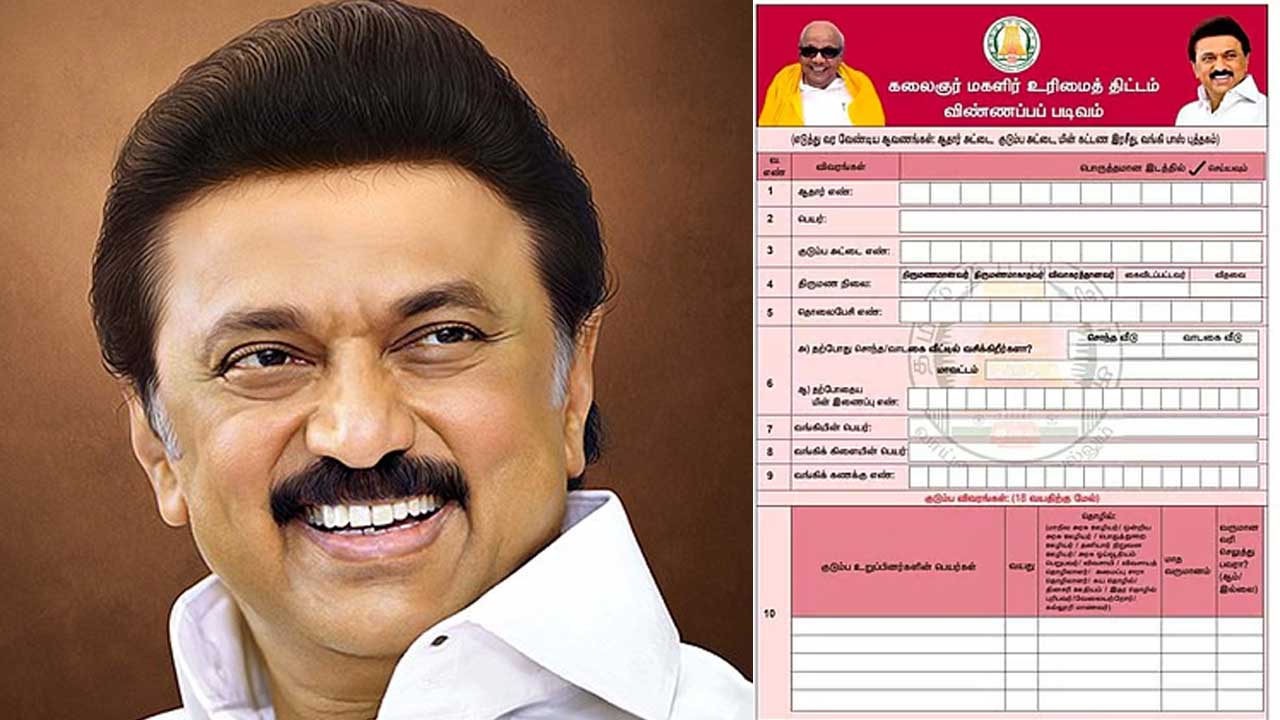
Introduction:
Magalir Urimai Thogai Application, Eligibility, and Grievance Process Explained Using KMUT The quiet strength of women managing households rarely makes headlines, yet it keeps families and communities stable. Rising living costs make this responsibility even heavier, especially for women who handle daily expenses with limited income. Recognizing this reality, the Kalaignar Magalir Urimai Thogai scheme was introduced to provide consistent financial support. This initiative is not charity but recognition of women’s role as decision-makers and financial managers within their families.
The Magalir Urimai Thogai Thittam is a landmark welfare initiative launched by the Government of Tamil Nadu under the leadership of M. K. Stalin with the objective of empowering women and strengthening the economic foundation of families across Tamil Nadu.
This scheme provides a monthly financial assistance of ₹1000 to eligible women who are recognized as the head of their households, ensuring that they receive a stable source of income to manage daily expenses and improve their quality of life.
The primary use of the Magalir Urimai Thogai is to support essential household needs such as purchasing groceries, vegetables, rice, pulses, cooking oil, and other basic food items that are necessary for maintaining family nutrition and well-being. In many low- and middle-income families, women are responsible for budgeting and managing household expenses, and this monthly assistance helps reduce financial stress by providing them with independent purchasing power.
The amount may appear modest, but for economically weaker sections, it significantly contributes to meeting electricity bills, water charges, LPG cylinder refills, and school-related expenses for children, including notebooks, uniforms, bus fees, and examination fees. By ensuring that the money is directly credited to women’s bank accounts, the scheme promotes financial inclusion and encourages savings habits among beneficiaries.
Women can use the assistance to invest in small-scale income-generating activities such as tailoring, petty shops, homemade food businesses, flower selling, dairy farming, or other micro-enterprises, thereby enhancing family income and promoting self-reliance. In rural areas, the fund can be utilized for agricultural support activities such as purchasing seeds, fertilizers, poultry feed, or maintaining livestock, which in turn strengthens rural livelihoods.
The scheme also helps women manage emergency medical expenses, especially for children and elderly family members, reducing dependence on high-interest loans from private moneylenders. Furthermore, the Magalir Urimai Thogai fosters women’s empowerment by recognizing them as heads of households, symbolically reinforcing gender equality and decision-making authority within families. It encourages women to open and actively use bank accounts, thereby integrating them into the formal financial system. The financial assistance can also be used to repay small debts, join self-help groups (SHGs), or contribute to community savings schemes, which collectively improve social and economic stability. In urban areas, beneficiaries may allocate the funds toward rent payments, transportation costs, mobile recharges necessary for digital access, or skill development courses that enhance employability.
The scheme indirectly improves children’s education outcomes, as mothers with financial support are better positioned to ensure consistent school attendance and purchase learning materials. Additionally, women can use the monthly support to improve household sanitation by buying cleaning supplies or contributing to minor home repairs, thereby enhancing living conditions. From a broader perspective, the Magalir Urimai Thogai stimulates local economies because the distributed money circulates within villages and towns through daily purchases, benefiting small traders and vendors. It also reduces the vulnerability of women to economic shocks such as sudden job loss of a spouse or seasonal unemployment.
By providing a guaranteed monthly support, the government creates a safety net that strengthens social security and reduces poverty levels. The psychological impact of receiving direct financial assistance should not be underestimated; it builds confidence, self-respect, and a sense of recognition among women, motivating them to participate more actively in community development and decision-making processes. Moreover, the scheme aligns with the broader goals of social justice and inclusive growth by targeting women from economically disadvantaged backgrounds.
The assistance can also be saved gradually to meet long-term goals such as purchasing household appliances, contributing to children’s higher education funds, or covering marriage-related expenses. For widows, single mothers, and elderly women, the scheme serves as a vital support system that ensures financial independence and dignity. The Magalir Urimai Thogai Thittam thus functions not only as a welfare measure but also as a transformative policy that empowers women socially, economically, and psychologically. It strengthens the role of women as financial managers, caregivers, and contributors to family prosperity. By recognizing women’s unpaid domestic labor and providing monetary support, the scheme acknowledges their invaluable contribution to society.
In conclusion, the uses of the Magalir Urimai Thogai Thittam extend far beyond basic household expenses; it promotes women’s empowerment, financial independence, social security, improved education and health outcomes, local economic development, and overall family welfare, making it one of the most impactful initiatives introduced by the Government of Tamil Nadu for the upliftment of women and the betterment of society as a whole.
What Makes Kalaignar Magalir Urimai Thogai Important
Kalaignar Magalir Urimai Thogai is a monthly financial assistance scheme aimed at women who serve as heads of their households. The support is designed to strengthen financial independence and ensure basic economic security. By crediting the assistance directly to the beneficiary’s bank account, the scheme promotes transparency and dignity. This direct benefit approach ensures women have control over how the funds are used for household needs.
Who Is Eligible to Apply for the Scheme
Magalir Urimai Thogai Application, Eligibility, and Grievance Process Explained Using KMUT Eligibility is carefully defined to ensure the benefit reaches deserving women. Applicants must meet household and income-related conditions set by the government and should be recognized as family heads in official records. Eligibility verification helps avoid misuse and ensures fair distribution of funds. Understanding these criteria before applying reduces the chances of rejection and makes the application process smoother for genuine beneficiaries.
Documents Needed for Successful Registration
Applicants must submit essential documents that verify identity, address, household details, and bank information. These documents play a crucial role in confirming eligibility and enabling direct benefit transfer. Even small discrepancies between documents and application details can delay approval. Preparing accurate and clear documents in advance significantly improves the chances of quick verification and timely benefit disbursement.
How to Apply Through the KMUT TNeGA Website
The application for Kalaignar Magalir Urimai Thogai can be completed online through the official KMUT TNeGA website. The portal is designed to be accessible and simple, allowing applicants to enter personal details, upload documents, and submit bank information securely. Each step is guided clearly so that even first-time users can complete the process without difficulty or external assistance.
Step-by-Step Experience of the Online Application
Magalir Urimai Thogai Application, Eligibility, and Grievance Process Explained Using KMUT Once applicants access the KMUT TNeGA portal, they are required to fill in household and personal details carefully. Uploaded documents are cross-verified with government databases to ensure authenticity. After submission, applicants receive confirmation that their request has entered the verification stage. This structured digital process reduces paperwork, saves time, and minimizes the need for physical visits to government offices.
Mistakes That Can Delay Approval
Many applications are delayed due to simple errors such as incorrect spelling of names, mismatched bank account details, or unclear document uploads. Some applicants also skip mandatory fields, causing applications to remain incomplete. Reviewing all entered information before final submission is essential. Careful attention during the application stage can prevent unnecessary delays and repeated corrections later.
Verification Process and Benefit Approval
After submission, applications undergo a detailed verification process conducted by authorized officials. This includes checking household records, income eligibility, and bank account validity. Verification timelines depend on application accuracy and volume. Applicants can monitor their status through the same KMUT TNeGA website, which adds transparency and keeps beneficiaries informed throughout the approval process.
Direct Bank Transfer and Financial Control
One of the strongest features of the scheme is the direct transfer of funds to the beneficiary’s bank account. This eliminates intermediaries and ensures that women receive the full benefit amount without deductions. Direct access to funds empowers women to manage household expenses confidently, plan monthly budgets, and handle emergencies without depending on others.
Long-Term Impact on Women and Families
Regular financial support under Kalaignar Magalir Urimai Thogai contributes to improved household stability over time. It helps women meet essential expenses related to food, education, healthcare, and utilities. Beyond immediate relief, the scheme builds confidence and reinforces the role of women as financial decision-makers. This long-term impact strengthens families and contributes to broader social development.
Transparency and Digital Security in the Application System
Magalir Urimai Thogai Application, Eligibility, and Grievance Process Explained Using KMUT The KMUT TNeGA website follows a transparent and secure digital framework to protect applicant data. Applicants can track application progress and payment status online, reducing uncertainty and confusion. Secure authentication and verification processes help prevent fraud while ensuring that genuine beneficiaries receive support efficiently. This digital approach increases trust in the system and encourages wider participation.
Apply Urimai Thogai Below
In case applicants face issues such as application rejection, payment delays, incorrect details, or missing benefits, a dedicated grievance facility is also available through the KMUT TNeGA platform. Using this grievance option, beneficiaries can submit their complaints online by providing relevant details and reference information. This system ensures that concerns are formally recorded and reviewed by the concerned authorities, offering applicants a transparent way to seek resolution without visiting offices or depending on intermediaries.