
Introduction:
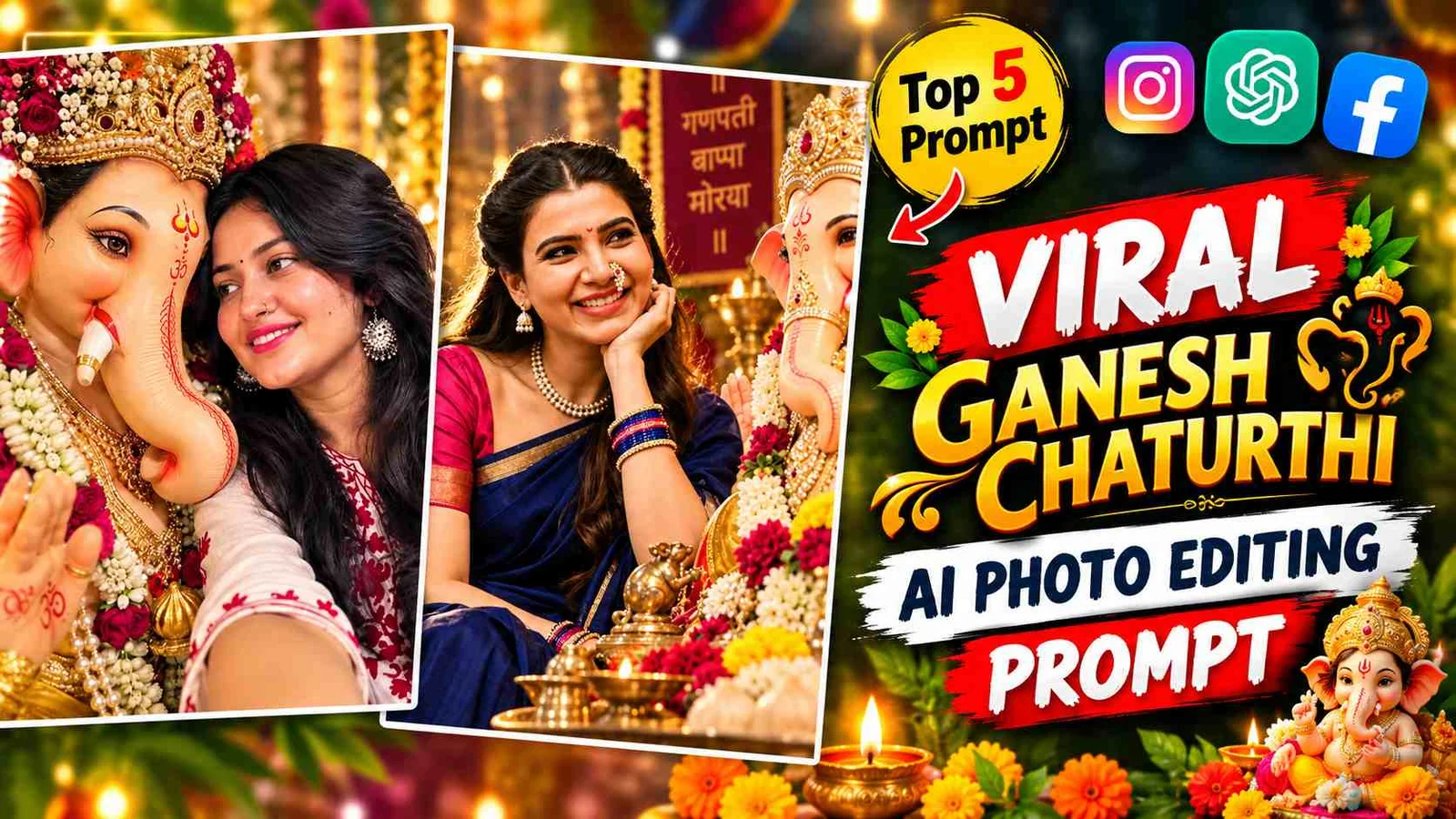
Vinayagar Chaturthi Photo Editing Prompt Vinayagar Chaturthi is one of the most celebrated Hindu festivals, dedicated to Lord Ganesha, the beloved elephant-headed deity known as the remover of obstacles and the symbol of wisdom, prosperity, and new beginnings. In the digital age, celebrating this festival has expanded beyond traditional decorations, prayers, and processions. People now enjoy creating beautiful, creative, and devotional photographs using advanced photo-editing tools and artificial intelligence. A well-written Vinayagar Chaturthi photo editing prompt can transform an ordinary portrait into a memorable festival image filled with devotion, color, tradition, and cinematic beauty. Whether the goal is to create a social media profile picture, Instagram post, WhatsApp status, or a festive greeting, the right prompt helps produce a visually impressive result while preserving the natural identity of the person in the original photograph.
1. Understanding the Importance of Vinayagar Chaturthi Photo Editing
Vinayagar Chaturthi photo editing combines religious celebration with modern digital creativity. The festival is traditionally observed by installing beautifully decorated Ganesha idols, offering prayers, preparing festive foods, and participating in cultural activities. A photo-editing prompt allows these elements to be incorporated into a portrait without requiring an elaborate physical setup. A simple photograph can be transformed into a devotional scene featuring a colorful Ganesha idol, flowers, lamps, traditional clothing, and a festive background. The purpose is not merely to add attractive effects but to create an image that reflects the spiritual atmosphere of the celebration. A successful edit should feel respectful, natural, and emotionally connected to the festival. It should also maintain the person’s recognizable facial features so that the final image remains personal rather than looking like an unrelated generated character.
2. Choosing the Right Reference Photo
Vinayagar Chaturthi Photo Editing Prompt The quality of a Vinayagar Chaturthi photo edit depends greatly on the reference photograph. A clear image with good lighting, visible facial features, and a suitable pose generally produces better results than a blurry or heavily filtered picture. The face should be clearly visible, and the original expression should ideally be natural. Front-facing or slightly angled portraits are often suitable for devotional compositions because they allow the editing tool to position the subject naturally beside or behind a Ganesha idol. The background does not need to be perfect, as it can be replaced during editing, but the subject’s face, body posture, and clothing should be reasonably clear. When using an AI image editor, the prompt should specifically instruct the tool to use the uploaded photograph as a strict identity reference. This helps prevent unwanted changes to facial structure, skin tone, age, hairstyle, and overall appearance.
3. Preserving Facial Identity and Natural Appearance
One of the most important instructions in any personal photo-editing prompt is to preserve the identity of the person. AI tools sometimes change facial proportions, eye shape, nose structure, skin texture, or hairstyle while generating a new scene. For a personal festival portrait, these changes can make the result look artificial or unlike the original person. A strong prompt should clearly state that the face must remain recognizable and that the facial structure must not be altered. It should also request natural skin texture, realistic facial proportions, and the same age and appearance as the reference image. The editing process should focus on changing the environment, clothing, lighting, and festive elements rather than redesigning the person. This is especially important when the image is intended for a profile picture or social media post where authenticity matters.
4. Adding Lord Ganesha and Devotional Elements
Vinayagar Chaturthi Photo Editing Prompt Lord Ganesha should be the central devotional element of the composition, but the idol must be integrated naturally into the scene. The prompt can describe a beautifully decorated Ganesha idol with a traditional crown, expressive eyes, colorful ornaments, flower garlands, and a peaceful divine appearance. Depending on the desired style, the idol may be placed beside the person, held carefully in the subject’s hands, or positioned on a decorated platform. Additional elements such as marigold flowers, lotus flowers, banana leaves, traditional lamps, incense, and festive decorations can enhance the atmosphere. The prompt should avoid overcrowding the image with too many unrelated objects. A balanced composition allows both the person and the idol to remain visually clear. The devotional setting should look respectful and authentic, with the idol presented as the main symbol of the celebration.
5. Selecting Traditional Clothing and Accessories
Traditional clothing can make a Vinayagar Chaturthi portrait look more authentic and culturally appropriate. For men, a crisp white shirt paired with a white veshti or dhoti with a subtle gold border creates a clean and elegant appearance. Traditional accessories such as a simple gold chain, bracelet, or watch may be added carefully without making the image look excessive. For women, a beautiful saree, traditional jewelry, flowers in the hair, and a graceful festive appearance can complement the devotional setting. Children can be dressed in traditional kurta-pyjamas, dhotis, pavadais, or other festive outfits. The prompt should describe the clothing clearly while instructing the editor to maintain realistic fabric textures, natural folds, and accurate proportions. The colors should harmonize with the festival background, allowing the subject to stand out while remaining part of the overall composition.
6. Creating a Colorful Festival Background
The background plays a major role in establishing the mood of a Vinayagar Chaturthi image. A plain background can be transformed into a festive setting featuring colorful decorations, flower garlands, traditional fabric drapes, and warm decorative lights. Shades of red, yellow, orange, gold, and green are commonly associated with festive Indian celebrations and can create a vibrant visual effect. A decorated home prayer area, a traditional festival stage, or a beautifully arranged puja mandapam can serve as an ideal background. The prompt should specify that the background must remain realistic and proportionate to the subject. Excessive decorations may distract from the face and idol, while a carefully arranged background creates depth and elegance. Softly blurred lights in the distance can add a cinematic appearance without making the image look artificial.
7. Using Cinematic Lighting and Professional Photography Effects
Lighting is one of the most effective ways to improve the quality of a festival portrait. A prompt can request warm golden lighting, soft highlights, realistic shadows, and gentle illumination from traditional oil lamps. Cinematic lighting can make the image feel like a professional studio photograph while preserving the devotional atmosphere. The face should be evenly lit, with natural skin tones and sufficient detail. Soft rim lighting around the subject can help separate the person from the background, while subtle bokeh effects can create a premium visual style. The prompt may also include terms such as ultra-realistic, highly detailed, professional editorial photography, natural skin texture, cinematic composition, and high-resolution clarity. However, the lighting should not become so dramatic that the image loses its natural appearance. The best results balance visual beauty with realism.
8. Choosing the Best Composition and Aspect Ratio
Vinayagar Chaturthi Photo Editing Prompt The composition of a Vinayagar Chaturthi photo should be planned according to its intended use. A vertical 9:16 composition is ideal for Instagram Reels, Stories, WhatsApp Status, and mobile-screen content. A square 1:1 image works well for WhatsApp profile pictures, Instagram posts, and social media display images. A 4:5 portrait ratio is often suitable for Instagram feed posts because it provides more vertical space while remaining visually balanced. A horizontal 16:9 composition may be useful for YouTube thumbnails, banners, or festival greeting designs. The prompt should specify the desired aspect ratio and instruct the editor to keep the face and Ganesha idol fully visible. Important details should not be placed too close to the edges, especially when the image may be cropped by social media platforms. Proper composition ensures that the final image looks attractive across different devices.
9. Writing an Effective AI Photo Editing Prompt
A good AI photo editing prompt should be descriptive, organized, and specific. It should explain the reference image, identity preservation, clothing, pose, Ganesha idol, background, lighting, camera quality, and final composition. Vague instructions such as “make my photo festive” may produce inconsistent results because the tool has too much freedom to interpret the request. A detailed prompt provides clearer guidance and improves the chances of receiving a realistic image. It is also useful to include negative instructions such as no face distortion, no extra fingers, no unnatural hands, no blurry details, no cartoon appearance, no text, no watermark, and no changes to facial identity. These instructions help reduce common AI generation errors. The prompt should remain focused on the intended visual style rather than including unnecessary details that may confuse the editor.
10. Ready-to-Use Vinayagar Chaturthi Photo Editing Prompt
Vinayagar Chaturthi Photo Editing Prompt The following prompt can be used with an AI photo editor to create a realistic and cinematic Vinayagar Chaturthi portrait. It is designed to preserve the person’s identity while adding traditional clothing, a beautifully decorated Ganesha idol, and a festive atmosphere.
Use the uploaded image as a strict, non-negotiable identity reference. Create a high-quality, ultra-realistic cinematic studio portrait of the same person, preserving the exact facial identity, facial features, face shape, skin tone, age, hairstyle, and natural appearance. Do not alter the person’s identity or facial structure. The face must remain clearly recognizable and look natural.
Transform the scene into a beautiful and devotional Vinayagar Chaturthi celebration. The person is respectfully holding a beautifully decorated, colorful Lord Ganesha idol with both hands. The idol should have a traditional crown, elegant ornaments, vibrant flower garlands, and a peaceful divine expression. Add authentic festive details such as marigold flowers, lotus flowers, traditional oil lamps, subtle incense smoke, decorative fabric, and a beautifully arranged puja background.
Dress the person in a crisp traditional white shirt paired with a clean white veshti or dhoti featuring a subtle gold border. Add simple traditional gold accessories for an elegant festive appearance. Keep the clothing realistic, with natural fabric folds, accurate proportions, and a premium traditional look.
Prompt Here
Use warm golden cinematic lighting, soft highlights, realistic shadows, natural skin texture, and gentle illumination from traditional lamps. Create a professional editorial photography style with rich but natural colors, realistic depth of field, subtle background bokeh, and high-resolution clarity. The background should feel festive, spiritual, colorful, and authentic, without becoming overcrowded.
Maintain realistic hands, fingers, body proportions, and facial details. Ensure the Ganesha idol is positioned naturally and respectfully. Keep the composition balanced, with the person and idol clearly visible. Use a vertical 9:16 aspect ratio suitable for Instagram Reels, WhatsApp Status, and social media posts.
The final image should look like a professionally photographed Vinayagar Chaturthi portrait, not a cartoon or artificial AI image. Avoid face distortion, altered facial structure, extra fingers, deformed hands, blurry details, unrealistic skin, excessive effects, random objects, text, logos, and watermarks.
A successful Vinayagar Chaturthi photo edit is created by combining a clear reference image, a detailed prompt, realistic devotional elements, and careful attention to identity preservation. The strongest results do not simply add a festival background; they create a complete visual story that feels personal, respectful, and emotionally meaningful. By selecting suitable clothing, incorporating Lord Ganesha naturally, using warm cinematic lighting, and choosing the correct aspect ratio, anyone can create a memorable festival portrait for sharing with family and friends. As AI photo-editing technology continues to improve, these prompts provide an accessible way to express devotion and creativity while preserving the beauty of traditional celebrations.